

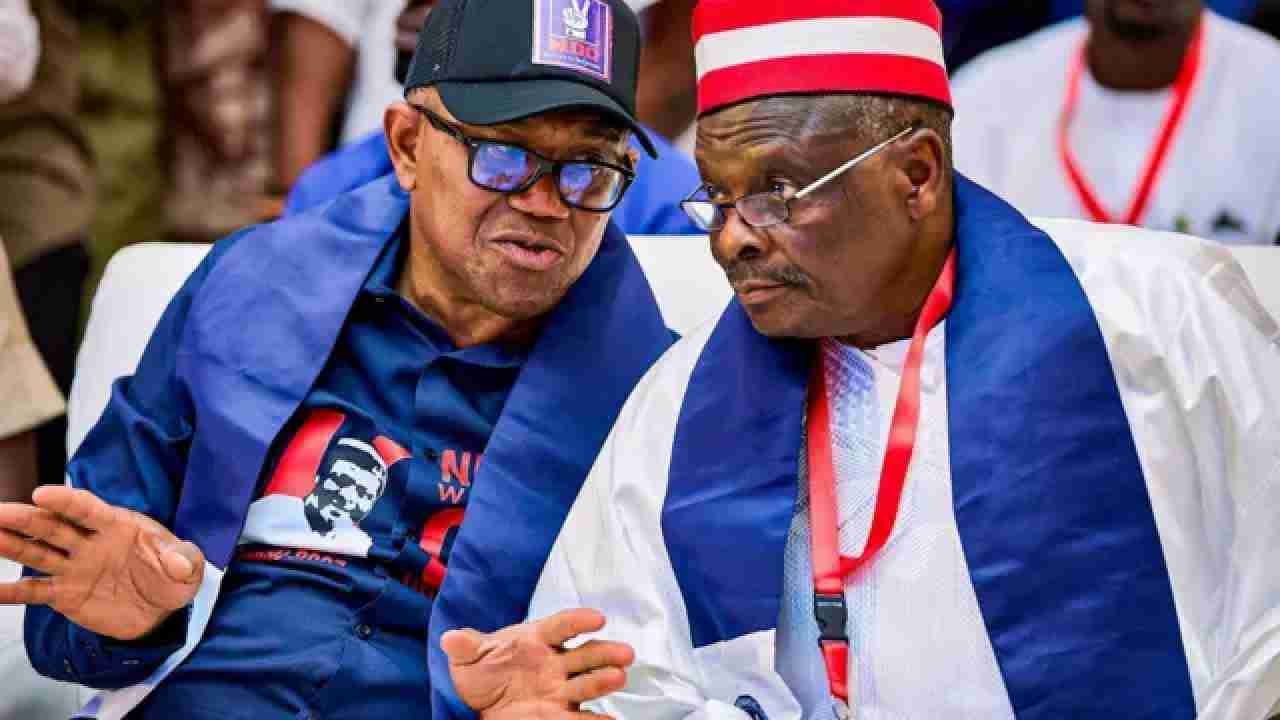
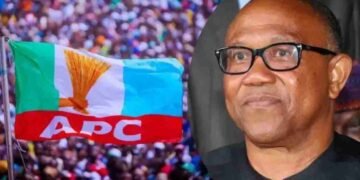
A Federal High Court has set aside the judgment that registered the NDC, casting doubt over the political plans of Peter Obi and Rabiu Musa Kwankwaso.
Philips News reports that a Federal High Court sitting in Lokoja, the Kogi State capital, north-central Nigeria, has set aside its earlier judgment directing the Independent National Electoral Commission (INEC) to register the Nigeria Democratic Congress (NDC) as a political party, effectively reopening the legal dispute over the party’s recognition. The ruling, delivered on Friday by Justice Isah Dashen, restores the status that existed before the December 10, 2025 judgment pending a fresh hearing of the case.
The presiding judge ruled that the previous judgment could not stand because all parties with an interest in the matter were not allowed to be heard. The court agreed that the Peace Movement Party (PMP) was a necessary party to the proceedings, adding that the omission rendered the earlier decision constitutionally defective and invalid.
Justice Dashen further directed that the substantive suit should commence afresh with INEC, the NDC and the PMP joined as parties. He also noted that material facts had not been disclosed during the earlier proceedings, a factor the court said justified setting aside its previous judgment and returning the case for a fresh determination.
Counsel to the applicant, Chikezie Ekeocha, told journalists that the PMP approached the court after discovering that NDC’s registration was based on a logo it had previously submitted to INEC before the commencement of the suit.
Ekeocha stressed that the court agreed that the applicant’s rights had been affected and consequently vacated the earlier judgment.
“The court has ordered all parties to return to the position they occupied before the judgment of December 10, 2025, and directed the claimants to join all necessary parties to ensure the issues in dispute are effectually and completely determined,” he said.
Counsel to the applicant explained that the ruling means that every action taken by INEC in compliance with the now-vacated judgment is reversed.
“The recognition of the NDC, the issuance of its certificate of registration, its inclusion in INEC’s records, and any appearance on ballot papers arising from that judgment must be withdrawn pending the final determination of the substantive suit,” Ekeocha stated.
However, Ekeocha clarified that the substantive case remains before the court and has not been decided.
“The matter has not been concluded. The court merely set aside its previous judgment and directed that the party whose interests were affected be joined so that all sides can be heard before a fresh decision is reached.”
Ekeocha also dismissed suggestions that the court merely ordered parties to maintain the status quo, insisting that the ruling specifically directed a restoration of the position that existed before the December 10, 2025 judgment.
What this means for Peter Obi and Kwankwaso as NDC candidates:
While the judgment does not personally disqualify Peter Obi from running for president, it, however, temporarily removes the legal foundation for the NDC’s registration.
Unless the NDC regains legal recognition through the fresh court proceedings or another lawful process, it cannot ordinarily sponsor candidates for election, including a presidential candidate. Whether Peter Obi can ultimately contest on the NDC platform will depend on the outcome of the fresh hearing and any subsequent actions by INEC and the courts.
Interpretation of the judgment:
If this judgment stands as described, it creates a significant legal obstacle for Peter Obi’s emergence as the Nigeria Democratic Congress (NDC) presidential candidate—but it does not automatically disqualify him from contesting if the issue is later resolved.
Here’s what the ruling means:
1. The court has cancelled the legal basis for NDC’s registration
The Federal High Court set aside its earlier judgment that ordered INEC to register the NDC.
That means the court has effectively returned the situation to what existed before December 10, 2025, pending a fresh hearing.
2. The NDC is no longer legally recognized—for now
According to the court’s order:
- INEC’s registration of the NDC is reversed.
- The party’s certificate of registration must be withdrawn.
- Its inclusion in INEC’s official records is to be removed.
- Any ballot recognition based on that judgment is also reversed.
In practical terms, the NDC currently has no legal status as a registered political party unless another valid legal basis exists.
3. What this means for Peter Obi
Since Peter Obi has been nominated as the NDC presidential candidate:
- His candidacy cannot presently enjoy legal recognition through the NDC because the party’s registration has been set aside.
- INEC cannot ordinarily recognize a presidential candidate sponsored by a party that is not legally registered.
- Any nomination made under the now-vacated registration could also become legally ineffective unless the court later restores the registration.
4. The judgment is not the final decision
The judge did not rule that the NDC can never be registered.
Instead, the court held that:
- The earlier judgment was defective because the Peace Movement Party was not heard;
- all interested parties must participate; and
- The substantive case must begin afresh.
So the dispute will be heard again with:
- INEC,
- the NDC, and
- the PMP.
The court could ultimately:
- uphold the NDC’s registration,
- refuse it, or
- Make another order after hearing everyone.
5. Political implication
Since Peter Obi is indeed relying on the NDC platform to contest the 2027 Presidential election, this ruling creates uncertainty because:
- The party currently lacks judicial backing for its registration;
- Any campaign or nomination under that platform may remain legally uncertain until the fresh case is decided or another court grants relief.
![BREAKING: INEC Declares Ademola Adeleke Winner of Osun Election 2026 [Video]](https://philipsnews.com/wp-content/uploads/2026/08/resizeplus_Gov-Adeleke-osun-1000x600-1-360x180.jpg)
![BREAKING: Paraguay Sends Germany Out of FIFA World Cup 2026 [Video]](https://philipsnews.com/wp-content/uploads/2026/06/resizeplus_Paraguay-players-75x75.jpg)
![BREAKING: Popular SPAR Shopping Mall On Fire [Video]](https://philipsnews.com/wp-content/uploads/2026/08/resizeplus_SPAR-Shopping-Mall-120x86.jpeg)

![Blaqbonez Reveals Cause of Feud with Odumodublvck [Video]](https://philipsnews.com/wp-content/uploads/2026/08/resizeplus_Odumodublvck-and-Blaqbonez-120x86.jpg)
![JUST IN: Wike Begins Demolition in Maitama Abuja Over Flooding [VIDEO]](https://philipsnews.com/wp-content/uploads/2026/08/resizeplus_dEMOLITION-IN-mAITAMA-nYESOM-WIKE-350x250.jpg)